In Support of Invisible Midwives Everywhere

Today is International Day of the Midwife. A day to honour all of the midwives who have been a part of all of our lives, after all, even those people without children of their own were born themselves once and chances are, a midwife attended their birth.

Midwives are there for women and their families on one of the most important days of their lives. Midwives nurture women in their care, guide them emotionally and physically through pregnancy, birth and early parenthood. Midwives save lives and witness daily the amazing entry into the world of new little people, quietly, confidently and with compassion. Midwives know when to sit back and be invisible, trusting women to birth their own babies and only coming to assist if the need arises.

Or at least they should.

Unfortunately the systems that midwives have to work within don’t allow them to do their job properly. They are forced to place time limits on the women in their care, to intervene unnecessarily on a regular basis and to persuade women to birth in big obstetric units if their employer is under the false impression that these units will prevent law suits from happening. The fact is that home is the safest place for women to give birth, it is also the cheapest place. Continuity of care from a trusted midwife also results in better and safer births. It’s utter madness that the system doesn’t grab hold of these facts and embrace genuine with-woman midwifery.

All over the world, women and midwives face persecution and legal action against them if they dare to step outside of that system. Agnes Gereb, Hungarian midwife and obstetrician, is currently under house arrest for attending women birthing out of hospital. Even here in the UK, NHS midwives who work with women at the centre of their care face the possibility of harassment in the workplace from their colleagues. AIMS has a Midwife Defence Fund that people can donate to, this fund helps secure legal representation and cover other costs to assist midwives facing persecution. You can donate here: 
http://aims.org.uk/MDF/

Independent midwifery is scheduled to become illegal as of October 2013, due to red tape. The EU has declared that IMs must have indemnity insurance, but no provider on the market is willing to insure midwives working outside the system. Therefore, by default, midwives will no longer be legally able to practice independently.

IMUK has been tirelessly searching for a solution, but there is no option available that will allow them to continue to provide care during birth for women who are anything other than “low risk”, that is, “risk” as defined by an extremely conservative legal team in charge of defining NHS protocols, which is not always the same as genuine medical risk. Even if it were, women should still have the right to choose their care provider and place of birth.

If I am ever to have another baby, I would not be able to be cared for by a skilled and experienced midwife of my choice in my own home, as I have had two previous caesareans and am therefore “high risk”. The actual risks of a home birth in my situation are tiny and I should be free to choose to birth there with a midwife of my choice. The changes in the law mean that I am extremely unlikely to ever have a third baby and if I do, I would be forced to choose between the luck of the draw NHS service, who treated myself and my husband so appallingly three years ago, or to not have a midwife present at my birth at all. Basically, I don’t want another baby at all if I can’t have the same amazing midwife that I had for the Bean’s birth.

So today, on International Day of the Midwife, I’d like to shout out my support to independent, with-woman and invisible midwives everywhere who are striving to care for women and their families despite great personal risk. You are all superstars.

Rebirth: A Second Chance

Rebirth. “A new or second birth”. A chance to start again, a chance to make new memories that heal the old ones. In terms of healing birth trauma a rebirthing might consist of re-enacting the birth in the way previously imagined or it might be a spontaneous and instinctive moment shared between mother and baby in the bath or in bed in the middle of the night.

After the Munchkin’s birth, someone suggested I try a rebirthing in order to heal emotionally from the trauma I experienced. But he was already about three months old, I wasn’t ready to let go yet and wouldn’t be for over two years, and the more time passed the less like a newborn he was and it just felt wrong to try. The very thought of getting my birth pool back out again made me burst into tears. So we never did it. I had to find healing from his birth the long, hard way and we’re finally there after some intensive therapy and an empowering second birth.

That second birth, however, was not the experience I longed for. Though it wasn’t traumatic in any way, it left me grieving. Within days of the Bean’s birth I knew I wanted to try a rebirthing. I needed to physically recover from the caesarean though and I needed to prepare in practical terms. I thought I wanted my midwife and doula to be there and was considering having the Munchkin there too, though at other times I felt I didn’t want him there. Getting everyone together at the same time looked unlikely when my doula gave birth to her own baby a few weeks after the Bean was born.

As the days turned into weeks I started to feel a bit desperate. My little newborn was rapidly developing into a strong baby and I was afraid it would get too late. So I decided to grab the opportunity as soon as the Munchkin was staying at my parents’ house for the night. Finally that moment came, 8 weeks after the Bean’s original birth.

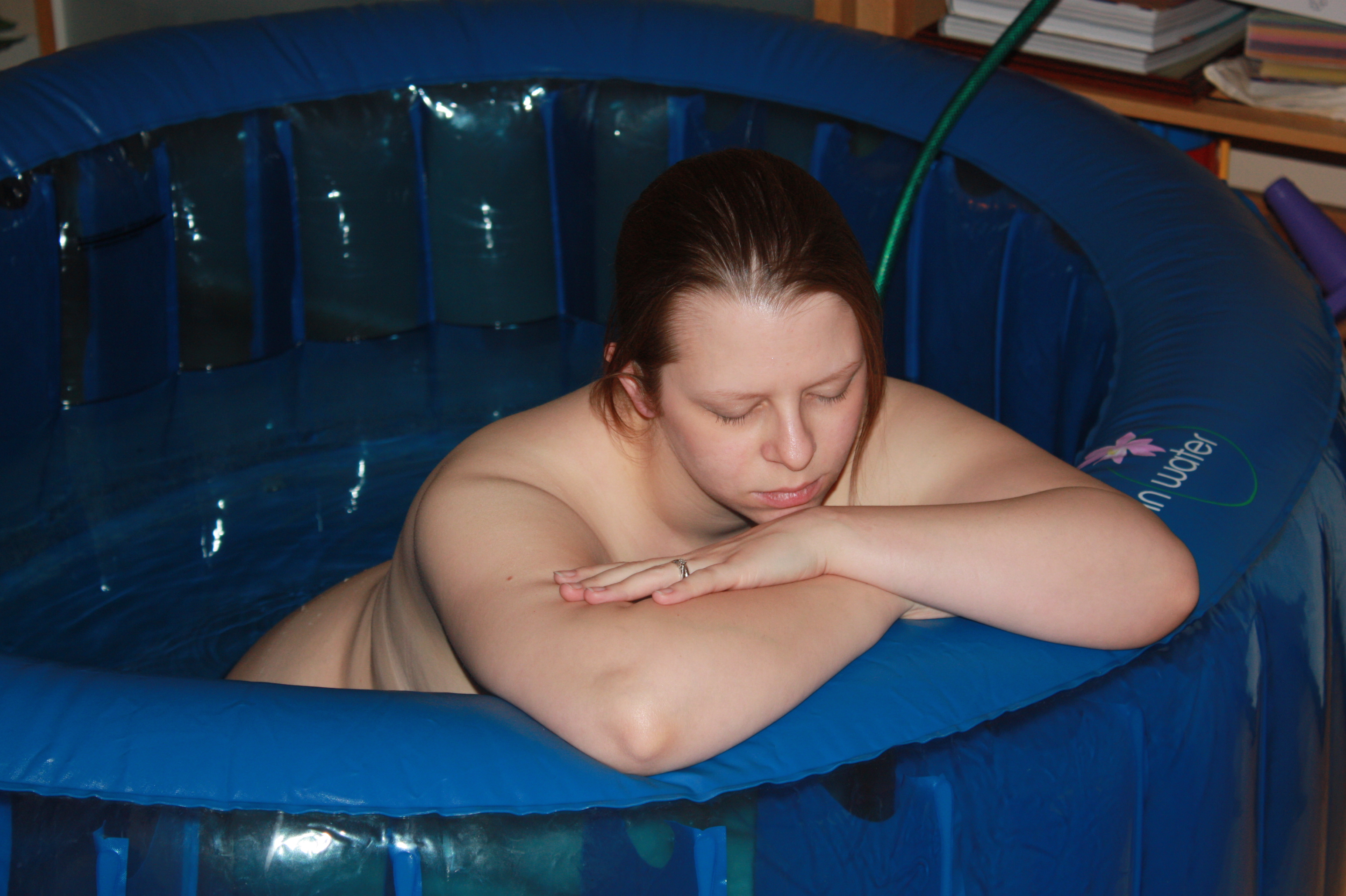
Today, after an absolutely beautiful day out with friends to celebrate the Munchkin’s third birthday, he went home with my mum and hubby and I made our preparations. We inflated and filled the pool, lit candles and put on my birth music. I got into the pool and listened to the song that had been one of my hypnosis triggers that I used during pregnancy and labour, Chimes, a song by an unsigned band called Glow. I thought about being pregnant, remembered my blessingway and the hope and anticipation I had felt about my forthcoming birth. These memories touched some raw emotions for me and I began to cry silently.
I changed the music to the song I had wanted playing as my baby was born. I had played it on repeat for a long time during my actual labour when it seemed I would be holding my baby imminently: Firework by Katy Perry. Cheesy? Maybe, but when I first heard it I felt it was the perfect song to accompany birth. What a strong message of the power and awesomeness of a birthing woman.

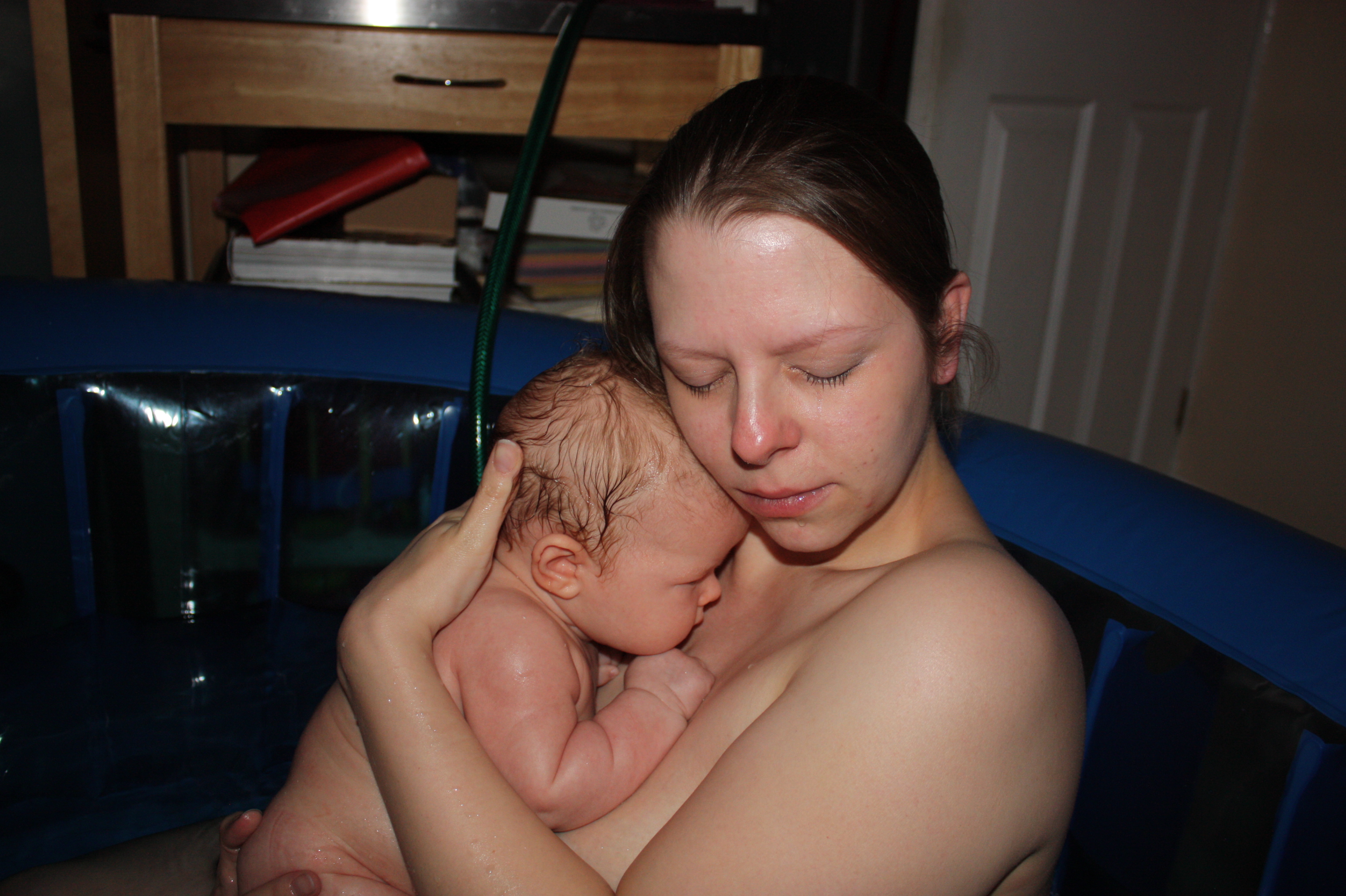
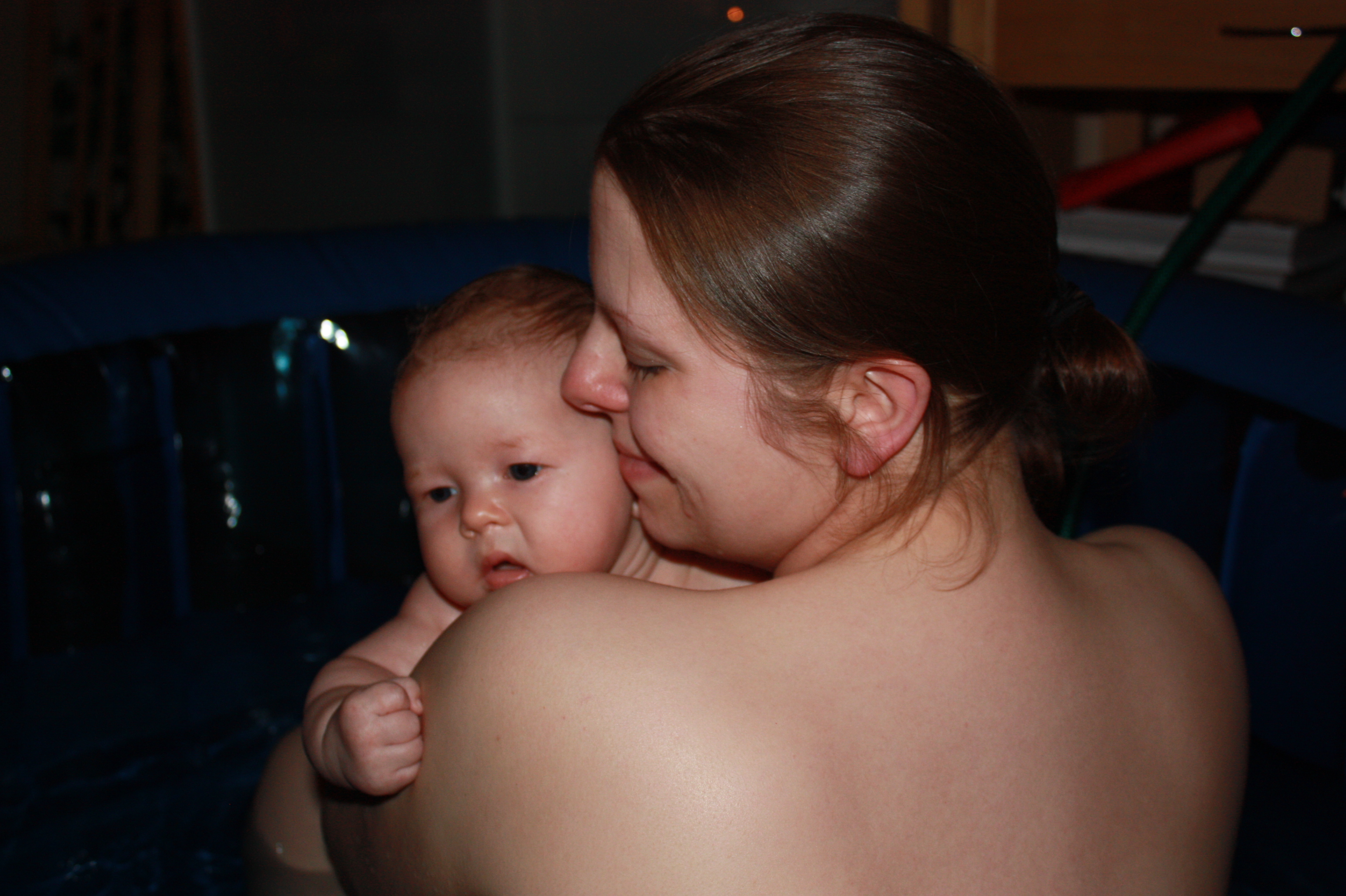
Hubby got into the pool with the Bean and passed him to me under my arm and through the water. I brought him straight to my chest and held him, I told him how much I love him and explained that this was how I had wanted to meet him. The tears flowed with overwhelming sadness and joy and hubby snapped away with the camera to capture the moment.

The Bean was calm and alert, looking carefully at me and around at the strange surroundings. We spent a few minutes in the pool and then moved to the sofa, wrapped up warm, where I fed him and hubby brought me some food. It was the post-birth chill that we should have shared but were denied by the circumstances of the Bean’s original birth.

This rebirth doesn’t undo that birth, nor would I want it to. His birth was truly awesome, in so many ways, but it wasn’t joyful. Now I have new memories, the memories I had hoped to create and that does undo some of the emotional damage of his birth.

But it’s late now, so I’m signing off to go and curl up in bed with my baby.

Examining the Contract

I have been asked to write about the thought processes behind some of my birth choices. I’d love to detail every decision and all of the research behind each, however, I am a busy mum of two and do not have weeks to draft, fact check and reference such a post! What I can do is highlight a few key aspects and talk about them in general terms.

No VEs. Vaginal examinations are often thought of as an essential part of labour, few women seem to question their use and a great deal of emphasis is placed on “knowing” how dilated a woman is, both by health care providers and by many mums. The fact is that the use of routine VEs is not evidence based. Experts in normal birth agree that women do not dilate in a linear fashion and that time limits placed upon birth are unrealistic and have no place in normal birth. How dilated you are at any given examination tells you nothing about how quickly your labour will progress and some, notably Ina May Gaskin, speculate that the vagina behaves as other sphincters in the body and can actually close up upon intrusion.

For women planning a hospital birth or a water birth in or out of hospital, they will be led to expect VEs in order to assess whether they are in “established” labour or not and whether they are “allowed” to get into the pool. The whole idea of latent and established labour is undermining. It implies that women in the early stages of labour do not need or are not entitled to support and for women experiencing a long latent phase, repeated examinations with little to no progress can be extremely demoralising. As for getting into the pool, it is thought that getting in too soon can slow down labour. Well so what? If that does happen then surely she can just get back out of the pool. Besides which, what is the rush, exactly? Women birthing at home with a pool should feel free to use that resource as and when they feel the need for it. They do not need permission to use it.

An experienced midwife should be able to assess the progress of labour without these intrusive examinations, the woman’s behaviour, the noises she is making, the dark line that extends up from the anus and up the back and even the smell in the room are all signs that midwives can look for to give them an idea of how the birth is unfolding.

I have to emphasis at this point that about six or seven hours into my second labour, all the signs pointed towards a very imminent birth. I laboured in much the same state for another twelve hours before consenting to a caesarean. So these signs are not always reliable, but I would argue that they are no less reliable than VEs and in a normally progressing birth they are probably more reliable.

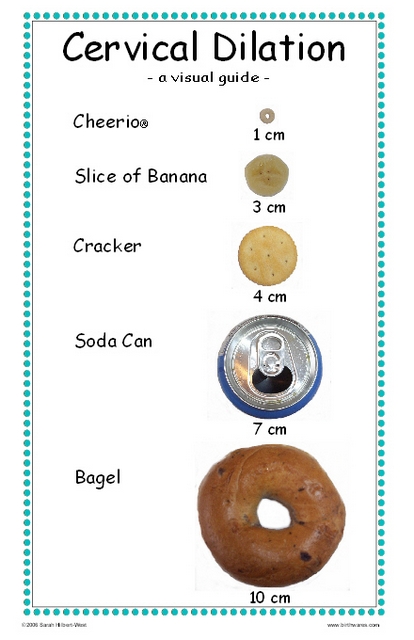
On a personal note, I felt that VEs were the cause of my first caesarean. I had intended to decline them, knowing how pointless they generally are, however when I was in labour I was told that I “had to” have them every four hours and I wasn’t in a state to refuse. Had I had a doula who could have reminded me that I didn’t want them and that I was entitled to refuse then perhaps that birth would have been different. I was having a long and intense latent phase, it took me twelve hours to reach 4cm. Each examination was painful and intrusive, disrupting my labour and crushing my confidence. This was reason enough for me to decline them second time around.

I did, however, ask for them when I was in labour because I knew that something was not right and I knew that some useful information might be gathered from one, such as the baby’s position, which can be found by the feel of the skull plates. I had to work quite hard to persuade my midwife that I really did want to be examined. She knew how strong my feelings on the matter were and she, quite rightly, wanted to make absolutely sure that I wanted one. I asked her not to tell me how dilated I was, I knew this information was irrelevant, but I needed to know if there was a reason why I had been pushing for hours already and felt no closer to birthing my baby.

No induction or augmentation. As a woman with a previous caesarean under my belt, the risk of uterine rupture was a hot topic. The real risk is tiny, 0.2%, but the use of drugs to induce or accelerate labour dramatically increase that risk. Even without a uterine scar, there are risks associated with this intervention, chiefly foetal distress. There are very few good reasons to induce labour, in my opinion. As long as the pregnancy is straightforward, and even some complicating factors warrant only a watch-and-wait approach, then there is no reason to interfere. I certainly wouldn’t accept induction for going “overdue”. You can see what I think about the length of pregnancy here.

As far as I am concerned, there was no good reason to augment my labour. Either birth will unfold in its own time, or urgent assistance is needed. My first labour was augmented. I was persuaded that my body wasn’t up to the task and I needed help to “coordinate” my contractions in order for my cervix to dilate. I begged for time, I really did not want to open myself up to all of the risks associated with the use of syntocinon, but I was bullied into it, told that my body had had plenty of time already and was clearly failing.

I can see how the use of synto has become so common, it is very normal for women to not labour well in hospital, the conditions are so far removed from those needed for birth to unfold naturally. In some situations augmentation may help to undo the damage caused by transferring into hospital, but for me, planning a home birth, this was irrelevant. I was only going to be going into hospital if me or my baby were in danger and needed immediate assistance.

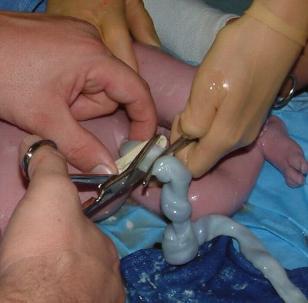
Leaving the cord alone. I planned and had a lotus birth. I recognise that this is an extreme most people will not be interested in, however, the principle of leaving the cord in tact at least until it stops pulsating, is one that is gaining popularity. Research now shows that babies whose cords are cut prematurely are deprived of up to half of their blood volume and are more likely to be anaemic, suffer brain damage or develop autism. In a straightforward birth there is no reason whatsoever to interfere with this process and doing so is potentially very harmful. Where my view is considered a little more radical is in the belief that even in a complicated birth, leaving the cord alone is possible and even advisable. If a baby is compromised at birth then it needs all of the blood and oxygen that it can get, cutting the cord deprives them of both. Many people seem to be under the impression that a nuchal cord, that is, when the umbilical cord is wrapped around the baby’s neck, is an emergency situation and that cutting the cord is necessary in cases when it is tightly wrapped. This simply isn’t true and this article explains why.

I’ll leave it there for now, but if there are any other aspects of my Birth Contract that you would like to know more about, please comment and I will do my best to explain my reasoning. Thanks for reading.

A Healing Birth Can Still Hurt

It’s a secret no one will tell you. My dear friend, and fellow blogger, Chloe, wrote about this recently. For those of us who have had traumatic births, we sometimes place a lot of hope on a subsequent birth, it becomes a lifeline out of the pit of that trauma. So what happens when that lifeline snaps? What happens when you don’t get the amazing birth you were planning? What happens when, like me, you get a birth that is far removed from the one you wanted but one that was not traumatic, in which you were completely respected and had your contingency plans followed to the letter?

My recent birth genuinely was healing and empowering. It was a positive experience, by and large. I was incredibly well supported, I was respected and listened to. I had all of my wishes listened to and accommodated where at all possible. I came out of it feeling elated that I had done something so rare and thrilled that people were talking about it. It might make a very real and positive difference for other women. My relationship with the Munchkin has improved massively. I can say with absolute sincerity, finally, that I gave birth to him. For years I could not say that, he was surgically removed from me, my caesarean wasn’t the same as giving birth. Now I feel differently and because the Bean’s birth followed such a similar pattern to the Munchkin’s, I can also speculate now that no amount of support would have resulted in a vaginal birth with him either. For years I was carrying this heavy weight around my neck: what if we had just done x, y or z? Well this time we did do x, y and z and it still didn’t result in a normal birth.

But there is a dark side to that realisation. For the first few weeks after the Bean’s birth I felt lighter. I felt relieved. But as time passed I realised the consequence… if nothing I could have done would have made any difference then why did my births both end in caesareans? If it was nothing to do with the support that I had, nothing to do with my antenatal preparation, nothing to do with the external conditions of my labour, then what is wrong with me? Because that is where my mind wanders, towards a reason. I’m not the sort of person who can just accept that “these things just happen”. Maybe once they do, but twice? Twice the same thing happened to me and my babies. To me that means something. To me that means that there is some sort of problem with me.

That’s a dark place to be. No matter how much those around me bent over backwards to make my birth as positive as it could be, no matter how close my bonds are with my children, I am still left aching emotionally. I am grieving for the birth I did not get. Again.

I know there will be people who think, and indeed, say, that I should shut up and be grateful that my babies are alive. I’ve heard it before, I’ve been told that I have “lost sight of what is really important” and to them I say: I matter. My mental health matters. My scarred uterus matters. My obstetric future matters. I don’t intend on having any more children, two has long been my theoretical limit, so right now I’m trying to come to terms with the idea that I will never, ever have a vaginal birth of any kind, never mind the beautiful home birth of my dreams.

There are three little words that I have read dozens of times in VBAC birth stories, three little words that carry such depth of feeling that I don’t think many people could fail to be moved by them and I expected to be uttering them myself: “I did it”. I will never say those words and that hurts.

So to all those wonderful, Very Brave And Courageous women out there who didn’t get their VBAC, or whose births have not taken them on the journey that they expected or wanted: I love you, I am crying with you and it is OK to cry, to grieve.

The All Powerful Birth Contract

My lotus caesarean was possible because I gave the possibility serious thought and planned for it, just in case. I discussed each aspect in depth with my independent midwife and prior to my labour she even floated the vague idea past the Consultant Midwife at the hospital, as a hypothetical situation, for her to discuss with her colleagues. When we arrived at the hospital we produced the following document, which details all of the conditions on which I would accept obstetric help. It is firmly worded, leaving no room for anyone to override my consent. I am so glad I had it and I am reproducing it here in the hope that others will be able to use elements of it, or the document in its entirety, to enable them to get the care and the birth that they are entitled to. It is written with the fact that I had independent midwives and a doula and was planning a home birth, however, it can be edited for those with NHS care providers and those planning a hospital birth. Please feel free to take what you can from it and share it with anyone you may feel would benefit from it.

Birth Contract

Baby expected: Early 2012

Planned place of birth: Home

Independent Midwives (IMs): ****

Birth Partners: ****

Onset of labour

If delivery prior to spontaneous onset of labour is medically indicated, I will only consider induction of any kind or caesarean section after very careful discussion with my independent midwife (IM) and husband.

Labour/Admission to Ward pre-section

I wish for my husband, IM and doula to have access to me to continue providing support, though I understand if this is only possible by rotating persons present in the delivery room.

My birth supporters have been given direct permission to advocate for me if I am unable to do so for myself.

I do not consent to vaginal examinations.

I do not consent to CFM without careful consultation with my IM about the possible risks vs benefits.

The birth space will be respected; anyone wishing to enter the room must knock and await invitation to enter, quiet voices will be used, lights will be dimmed.

I do not consent to the use of prostaglandins.

I do not consent to augmentation of labour with ARM or syntocinon. If there is a genuine reason to accelerate the birth of my child I will agree to caesarean section after discussion and agreement with my IM and husband.

I do not consent to administration of pethidine or any other opiate pain relief.

I will only consider epidural anaesthesia after careful consultation with my IM.

Birth & immediate post-natal period

I do not wish to be coached to push.

I will be using whatever position is most comfortable for me.

I do not consent to episiotomy unless an emergency situation develops.

I do not consent to ventouse or forceps delivery without consultation with my IM.

My baby will be handed directly to me for immediate skin to skin.

I do not consent to prophylactic administration of syntometrine.

I do not consent to premature cord clamping.

If my baby is in need of medical attention, it will be provided with baby in my arms or on a firm surface right beside me. There is NO NEED TO CUT THE CORD FOR THIS. I am planning a lotus birth, the placenta will remain attached to my baby, even in the event of a caesarean section.

My baby will be treated gently and respectfully; no vigorous cleaning, no routine suctioning of the airways.

I do not consent to routine administration of vitamin k. If the birth has been traumatic then I will consider oral vitamin k only and only after discussion with my IM and husband.

My family and I will not be separated. Provision will be made for my husband to remain with me and our baby at all times.

Caesarean Section

I will only consent to a caesarean section upon careful discussion with my IM and husband.

My IM is to accompany myself and my husband to theatre.

I do not consent to routine prophylactic antibiotics during surgery.

Anaesthesia should be in the form of spinal block, rather than epidural. General anaesthetic should only be administered with the direct consent of myself or my husband, upon the advice of our IM.

Voices will be kept low, as will lighting for the birth.

Forceps are only to be used to extract my baby after thorough efforts by hand have been exhausted. My IM will be watching.

My husband and I wish to discover the sex of our baby ourselves, no one else is to announce it.

The baby will be handed directly to me, uncleaned and with the cord intact and un-clamped.

Administration of syntometrine will be delayed until the cord has stopped pulsating. If this takes an unusually long time we can negotiate.

My placenta is to be kept attached to the baby and removed from me only after the umbilical cord has stopped pulsating. I understand the risks of my abdomen remaining open for this period.

If my baby requires immediate medical attention, it will be provided with baby in my arms or on a firm surface right beside me/between my legs. There is NO NEED TO CUT THE CORD FOR THIS. I am planning a lotus birth, the placenta will remain attached to my baby unless there is a clear medical need to separate them, not including resuscitation, as this can be done on a firm surface beside me. I do not consent to my baby’s primary source of oxygen (through blood flow from the placenta) to be cut off.

If I am unable to hold my baby immediately following birth then my husband is to be the primary contact.

If my baby does need to be taken from myself and my husband then my IM will remain with him/her at all times.

My baby will be treated gently and respectfully; no vigorous cleaning, no routine suctioning of the airways.

In the event of caesarean section, I will only consent to oral vitamin k if for some reason the cord has been clamped prematurely.

If the surgery takes place at night, provision will be made for my husband to remain with me and our baby.

Provision will be made for my baby to remain close to me at all times, including use of a co-sleeper bed/crib.

In the Event of Transfer for Retained/Adherent Placenta

My baby is to accompany me into theatre, as are my IM and husband.

My husband is to remain with me and our baby at all times, if admission is at night then provision will be made for him to remain with us.

Provision will be made for my baby to remain close to me at all times, including use of a co-sleeper bed/crib.

Feeding

I am planning to breastfeed and do not consent to my baby being given formula under any circumstances. If I am under GA then my husband and IM have permission to put the baby to the breast for me and express my milk to be given by cup or syringe. My milk or donor milk is to be given if I am incapacitated or unable to feed my baby myself for any reason.

I do not consent to the use of bottles under any circumstances.

Admission to Special Care

If my baby needs admission to the special care unit, my husband and I will be given unlimited access to our baby and we will be using Kangaroo Mother Care.

Please see feeding instructions above. If tube feeding is required for any reason, the milk MUST be breastmilk.

Opening Eyes

I have to start by saying that the labour and birth of my second baby followed almost the exact same biological pattern as my first birth experience. This time, however, I have not come out of it traumatised. I am very sad not to have had the HBAC that I planned for and dreamed of for so long, but the birth I did have was instinctive, empowered and healing. I was respected, I had amazing support from everyone around me, my body and my decisions were truly my own and I have come through the experience without regret.

So my labour began with a few indefinable niggles during Friday 27th January. I was absolutely convinced that my baby wouldn’t be born until February, having gone to 42+2 first time around I expected a slightly longer than average pregnancy again. So I tried not to get too excited about the niggles, being only just 40 weeks. However, my brain felt like it was trying to shut down too, I couldn’t concentrate on anything and just wanted to clean my house! I sent my colleagues on Four Mums a message asking for them to find cover for me for the upcoming weekly topic and joked that my neocortex was trying to shut down for birth. It was a joke, but it turns out I was spot on. I contacted my doula, Vicki, as she lives some distance from us and I wanted to make sure she had a good heads up, so I told her I was niggling but that I would probably still be niggling in a week! I knew my independent midwife, Debs, had been at a birth that morning, so I sent her a text asking if her other client had birthed and I had the all clear to go. She replied in the affirmative and I let myself relax, knowing everything was in place.

More

Entering the Birth Head Space

Before Christmas I decided that I needed to start winding down towards my forthcoming birth. I started cutting back on my volunteer and support work and tried to focus on me and my family. Christmas made it easy, plenty of family distractions. Entering January brought some challenges, it has been hard to stay away from the forums and groups that I typically frequent and to keep “work” at bay. If my professional life were completely disconnected from birth and parenting then I would just keep going, keep life normal for as long as possible in order to prevent days or weeks of waiting for birth. But my “work”, such as it is, is to support other pregnant women and new mums through problems they are having with their maternity care providers. I’m a sensitive person, I am easily emotionally stirred by the experiences of others and I find it extremely difficult to turn a blind eye to the problems of others. While this is a massive bonus normally, allowing me to fight passionately on behalf of others, at this point in my pregnancy I really need to focus my emotional energy inward, on myself.

There are others like me, with passion, enthusiasm and time to provide advice and support to those who need it. Acknowledging this and trusting them to continue to do so in my absence has been challenging, it is something I absolutely must do now.

A couple of weeks ago, my tribe of wonderful women friends and my amazing mum, came together with me to celebrate my pregnancy and the new life about to be born, in the form of a blessingway. It was a truly wonderful occasion, with friends coming considerable distances to join me for this, so much thought and attention had been applied by all, especially the lovely Jo who organised it. It was a deeply spiritual ritual, tailored to me and my beliefs, but hopefully open enough for those present to share in the thought behind it even if they came from different spiritual or religious backgrounds. Together we shared our fears and hopes, channelled energy and most importantly…. ate cake!

In the moments since in which I have struggled to keep worries at bay, I have looked down at my henna belly, touched the beads strung upon the necklace made for me and imagined the women of my tribe encircling me. Feeling their energy and support around me and within me is a true blessing.

As I approach this birth, which could happen any time in the next few weeks, I will continue to remember that and draw on it for the strength I need to overcome the challenges of the end of pregnancy and to enter the head space I will need for birthing my baby.

I feel emotionally ready to enter birth, I’m prepared on a practical level too with everything we need gathered together and ready to use. We have had a trial run with the birth pool, inflating and filling it, which, of course, had to be followed by an evening spent relaxing in it by candlelight. So now it is simply a case of allowing baby to be physically ready to choose the day. This is the hard part for me, being gracious and patient, though I know and believe it to be necessary and worthwhile. I’m still a normal human woman, I am uncomfortable with my size now and not sleeping as well as I wish I could, I’m bursting out of all of my maternity clothes and constantly fending off the “When are you due?” question with my suitably accurate “Some time soon” response.

I was given some affirmations at my blessingway and have written more for myself since. I share some of them with you now.

I am a link in an endless chain of birthing women.

300,000 women will be birthing with me. Relax, breathe and do nothing else. Labour is hard work, it hurts and you can do it.

We have a secret in our culture, and it is not that birth is painful, it is that women are strong. – Laura Stavoe Harm

I am surrounded by love and support.

My baby will be born at exactly the right time.

Live every day, enjoy each moment of pregnancy, for it won’t last long.

Every day my baby grows more ready to be born.

My body knows how to grow and birth the perfect baby.

Every day my body is preparing for birth.

Use this time wisely.

“When are you due?”

It’s pretty much the first question from everyone who finds out that you’re pregnant. I think on a rational level, the vast majority of people know that you can’t really predict when babies will be born, but I suspect the majority still believe that the Estimated Due Date (EDD) is scientific and accurate at least some of the time. The truth is though, it’s an arbitrary date determined by outdated pseudo science, a best guess, based on the probable misunderstandings of ancient theories.

The theory goes that pregnancy lasts for 40 weeks (9 months + 1 week) from the first day of a woman’s last menstrual period (LMP). Where did this idea come from? It’s called Naagele’s Rule, named after German obstetrician Franz Karl Naegele (1778–1851), who devised the formula. I don’t believe that Naegele plucked this idea out of thin air, it is likely that he read Aristotle’s theory that pregnancy lasts for about 10 lunar months, and Naegele assumed that a lunar month was 28 days.

Aristotle, however, was what I call a “well rounded wise man”. He was a philosopher, mathematician, scientist and sociologist. With his education in physics, it is extremely likely that he knew that a lunar month is not in fact 28 days, but nearly 29.5 days, making 10 lunar months 295 days, NOT 280, over 42 weeks, NOT 40. What a difference to pregnancy length that makes. What Aristotle actually wrote was:

pregnancy may be of 7 months’ duration or of 8 months or of 9 and still
more commonly of 10 (lunar) months, whilst some women go even into the
eleventh month. 


http://www.ncbi.nlm.nih.gov/pmc/articles/PMC1341914/pdf/bmjcred00258-0017.pdf

Naegele’s Rule also assumes that all women have exactly 28 day cycles and that they ovulate on cycle day 14. Obviously, this is not true. There is great variation in both cycle length and ovulation timing. There is a suggested alternative formula, Parikh’s Formula, which is a date calculated by adding 9 months to a woman’s LMP, then adding the length of her average cycle, then subtracting 21 days. For example, a woman with 35 day cycles whose last period began on 1st January would do the following calculation:

1st January + 9 months = 1st October

1st October + 35 days = 4th November

4th November – 21 days = 14th October

This EDD is approximately one week later than EDD calculated by Naegele’s Rule.

A small study in 1990 by Mittendorf et al. found that the parity of the woman was a factor in the length of her pregnancy. First time mums had an average pregnancy of 41 weeks and 1 day (41+1), second and subsequent babies arrived at an average of 40+3. Some studies have also found racial variations in pregnancy length.

Normal human gestation is usually defined as 37-42 weeks, by the WHO, maternity professionals and academics, and yet the myth of the EDD persists. Midwives and obstetricians do nothing to correct this misconception, they often seem to fixate on the EDD, first calculated by LMP and then by ultrasound, the infamous “dating scan” that most pregnant women have at about 12 weeks in the UK. (My views on the reliability of ultrasound are explored in my previous post “Guess the Weight”). The dating scan has a 6 day margin for error, officially, and yet it is relied upon so strongly that a woman’s knowledge about her own body is usually dismissed in favour of what the machine says. For instance, were we using NHS maternity services for this pregnancy, the sonographer that did our early pregnancy scan (for reassurance) would have us believe that this baby was conceived 8 days prior to ovulation and 3 weeks after the last time we made an attempt to conceive, a passing familiarity with human conception will tell you that this is impossible. No, in fact, this baby was conceived when I actually ovulated and not by some freaky and convoluted miracle process of my dear husband’s swimmers breaking all records and my body releasing an egg more than a week before all the physical signs indicated the possibility.

Even so, knowing when you conceived doesn’t actually give you any particular insight into how long your pregnancy will turn out to be. Gestation is a natural process and as such, it can’t be timetabled. There is great variation and most of it is completely incomprehensible, there is no known explanation for the wide variety in gestation lengths, it’s just an organic part of life and one that I think we would all do well to accept.
People pin all of this importance on the EDD and their care providers make it worse by rushing to intervene as soon as pregnancy continues beyond 40 weeks, which it does in more than 50% of all pregnancies! In my own small way, I try to challenge this by reminding people of the “Estimated” in EDD and emphasising that normal pregnancy is 37-42 weeks. I have also refused to tell anyone the precise date that I will be 40 weeks pregnant. I know when that date is, as I know when we conceived, but it is not my EDD, to me there simply is no such thing as an EDD. Our midwife knows the 40 week date, but together we have no expectation that there is anything special about that one day. It’s a vaguely useful day to note down so that we have an idea of what 5-6 week period the baby might put in an appearance, that’s all. To all of our friends, family, neighbours and random acquaintances, we expect this baby to arrive some time in February, probably.

When Headlines Are WRONG

I think most people probably know that newspapers are not always the most reliable sources when it comes to conveying factual information. Certain papers tend to sensationalise things and some even tell outright lies to their readers in order to sell more papers. Because the real news is often nowhere near as interesting as the made-up stuff.

What kinds of headlines sell newspapers? Babies dying, sadly, is a big seller and it’s one we’ve seen in the wake of the release of the long-awaited Birthplace Report, which was published yesterday. The Daily Fail notoriously misreported the study’s findings, with a lead headline of

First-time mothers who opt for home birth face triple the risk of death or brain damage in child

  • Half of women who chose home births had to be transferred to hospitals due to complications

Both of these statements are complete lies. Not just minor misrepresentations or misinterpretations of the facts, but actual lies, told to scare the public and stir up an emotive debate.

You may be able to tell that I have absolutely no respect for this publication, or others like it.

So, what is the truth behind this sensational headline?

The Birthplace report really did find an increased risk of death (stillbirth and neonatal mortality), brain damage (infant encephalopathy), meconium aspiration syndrome and bone fractures in the arm and collar bone in babies of first time mothers who plan home births, deaths did NOT make up the majority of these outcomes. HOWEVER, it was less than twice the risk of babies born in other settings, not three times the risk. Also, the actual risk is still less than 1% and the results are looking at the short term only, it is entirely likely that most of these babies are perfectly well after treatment.

Mothers who have children already face absolutely no increased risk to their babies by birthing at home.

There were so few infant mortalities in the study that the researchers decided to compound the results of a range of adverse outcomes in order to produce a study with statistically significant results. I have mixed views on this. On the one hand, it muddies the waters by mixing up the worst case scenario for the baby with a host of lesser problems. On the other, it does demonstrate very clearly just how safe birth is in the UK today (with a less than 1% risk of anything significantly bad happening to a baby, regardless of where it is born or how many babies the mother has had before).

As for the “Fail”‘s other assertion, well actually, it was less than half of mums, about 40%, who transferred and most of them were not for “complications” but for the infamous “failure to progress” and epidural pain relief.

A more accurate, and just as attention-grabbing headline might have read

Low risk mothers who plan hospital births are three times more likely to have an unplanned caesarean section than in any other birth setting

The study found that women planning births at home and in birth centres (both freestanding and attached to an obstetric unit) were overwhelmingly better off than those planning to birth in obstetric units. Women in hospital had a mere 58% chance of having a normal birth, whereas those planning to remain at home had an 88% chance. This study didn’t even touch on long-term results, such as breastfeeding duration or mental health.

These are all low risk women. And their health matters. Yes, we all care very much about babies and no one loves a mother’s baby or wants the best for it as much as she does… but mothers matter too. A healthy baby might not stay that way with a damaged mother and a damaged mother may remain damaged for the rest of her life as a result of her birth experience.

The elephant in the room with these results is… why do women do worse in hospital than in any other setting? The study can’t tell us that, but there are a number of theories. The most compelling to me personally, is that obstetricians view birth as a problem that needs fixing and that they have a tendency to step in and interfere where no interference is actually necessary. In an obstetric-led unit, even though all low risk women will be cared for primarily by midwives, there are always obstetricians waiting in the wings for something to do. At the study launch event at the Royal Society of Medicine yesterday, Dr David Richmond, Vice President of the Royal College of Obstetricians & Gynaecologists (RCOG)  implied as much in his talk when he showed a slide of Mount Everest and quoted Sir Edmund Hillary, who famously replied to the question of why he climbed Everest with “Because it’s there”.

Those of us who have taken an interest in normal birth and taken the time to investigate how birth works, are aware that birth goes the smoothest away from time limits, bright lights, loud noises, routine interventions and alien environments, i.e. at home. So the results of this study are no surprise. Women do best at home.

I think it’s very important for women to have access to the right information, presented in the right way, to enable them to make choices for their births, so let’s just compare the statistics for a moment.

  • A first time mum has roughly 0.5% chance of anything bad happening to her baby in hospital or in a midwife led unit. She has a less than 1% chance of anything bad happening to her baby at home. At home her baby is nearly two times more likely to have an adverse outcome.
  • The same mum has a roughly 15% chance of an instrumental delivery (ventouse or forceps) in hospital and 4% chance at home. In hospital it is over three times more likely.
  • She has a 10% chance of a c-section in hospital, less than 3% chance at home. In hospital it is over three times more likely.
  • There is a 23.5% chance of having her labour augmented in hospital (with all of the associated risks to both her and the baby that come with that) and just 5.4% chance at home. In hospital it is over four times more likely.

I’ll leave it up to each reader to digest those figures and decide for themselves where their preference for birth place lies, but do remember that these are all like-for-like mums, they are all low risk, so what these numbers suggest is that it IS the place of birth that influences the numbers. The mere fact of being in hospital makes these interventions more likely, and avoidable by staying at home or birthing in a birth centre (which tend to come out roughly the same as home or somewhere in between the two). It’s not that more women in hospital need these interventions because they are high risk.

Next time you read a sensational headline in the press, take a moment to think about what they aren’t telling you or the fact that they could actually be telling a barefaced lie.

Switching Off and Being a “Normal Mum”

Twice in just a few days I have been in situations where it is probably best to switch off my campaign head and shut up, be a “normal mum”, whatever that might mean. The first of these was the first of two Natal Hypnotherapy workshops that hubby and I are attending in preparation for this birth and I didn’t do so well. The second was my aquanatal class today. I did better.

I’ve always found it hard to know when to shut up and keep my opinions to myself and have probably pushed a fair few people away because of it in the course of my life. When my passions are raised they tend to spill out of me, but I’ve worked hard to get it under control and generally I think I do a better job now than ever before.

When it comes to birth, it’s a bigger challenge than most issues I’ve felt passionate about in my life. It’s such an intimate topic, birth is the single most significant physical act that a woman embarks upon and also the one fraught with the highest emotional investment too. I know that birth can be amazing and I know that all women deserve excellent maternity care. I know that there are fundamental, systemic problems with NHS maternity services that prevent the majority of women from having the births they should have. I hate seeing women being trampled on and abused by their care providers and it makes me angry and deeply saddened that I can even use the word “abused” there and know it to be no overstatement or falsehood.

Last Friday at the Natal Hypnotherapy workshop, I had to tell myself not to go to it expecting that I would know everything already and to accept any new knowledge or tools presented to me. At one point, having answered every question about hormones and birthing positions that we were asked, I actually apologised and made an effort to keep my mouth shut to give one of the others a chance to answer something. I felt a bit like Hermione Granger.

One of the other ladies on the course is also planning a VBAC and I couldn’t stop myself from making suggestions about which interventions she might wish to think more about. I don’t think I came on too strong there, but over lunch discussion turned to placentas (yes, over lunch) and I went and mentioned the fact that we’re planning a lotus birth. I think the others were mostly just intrigued, until I went a step too far and mentioned consuming the placenta as another option. I suspect I came away from lunch looking like a very weird hippy.

This afternoon was my aquanatal class, which I go to for the exercise and “me” time. After the class we sit in the café for a chat and the first time I went it was just me and the two midwives who run the class. We had a fantastic chat and I told them about what I do and which groups I’m involved in. They are lovely ladies, very keen on what they do, which is helping women keep fit and healthy in pregnancy and they have their gripes with the NHS, and so no longer work within it. However, I do suspect that they don’t see quite the same problems that I do.

Today there were others present, one lady due in a month or so and another who had a home birth a few months ago, another lady due early next year. I was very grateful for the home birthing mum’s presence, as she was able to say some of the things I would have loved to say, but in a much more palatable way than I can sometimes be guilty of. She was a normal, non-campaigning mum, a mum who only breastfed her eldest for a few months (compared to my 2.5 years) and who told us that her home birth “bloody hurt” and that she had a third degree tear and had to have a spinal afterwards while being stitched up. She was absolutely supportive of home birth and said she would do it again if she ever has another baby, but she definitely wasn’t ever going to come across as the dreaded hippy-type or militant birth campaigner. Like me.

For the most part I just nodded in agreement with her. When the nearly-due lady asked if it was possible to hire a midwife privately, as hers is so rubbish, I was able to espouse the virtues of independent midwifery and I also mentioned doulas. I think I managed to toe the line I find so difficult, that of switching off my campaigning head and just being a normal mum, talking to another normal mum and hopefully pointing her gently in a sensible direction that will help make a positive birth attainable. Maybe next week she’ll be telling us that she’s booked a home birth and hired a doula. Maybe even an IM. I hope so, for her sake.

Previous Older Entries

Follow

Get every new post delivered to your Inbox.

Join 33 other followers