Examining the Contract

I have been asked to write about the thought processes behind some of my birth choices. I’d love to detail every decision and all of the research behind each, however, I am a busy mum of two and do not have weeks to draft, fact check and reference such a post! What I can do is highlight a few key aspects and talk about them in general terms.
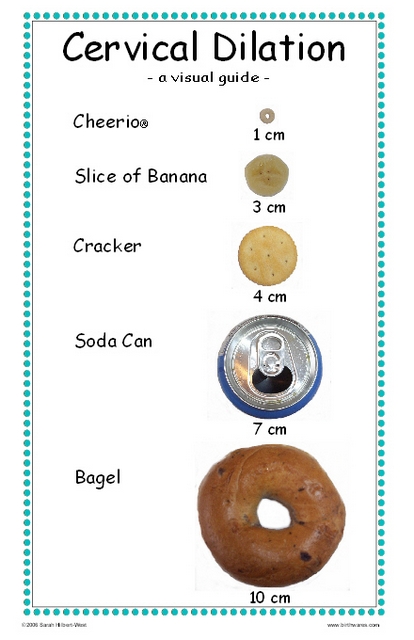
No VEs. Vaginal examinations are often thought of as an essential part of labour, few women seem to question their use and a great deal of emphasis is placed on “knowing” how dilated a woman is, both by health care providers and by many mums. The fact is that the use of routine VEs is not evidence based. Experts in normal birth agree that women do not dilate in a linear fashion and that time limits placed upon birth are unrealistic and have no place in normal birth. How dilated you are at any given examination tells you nothing about how quickly your labour will progress and some, notably Ina May Gaskin, speculate that the vagina behaves as other sphincters in the body and can actually close up upon intrusion.

For women planning a hospital birth or a water birth in or out of hospital, they will be led to expect VEs in order to assess whether they are in “established” labour or not and whether they are “allowed” to get into the pool. The whole idea of latent and established labour is undermining. It implies that women in the early stages of labour do not need or are not entitled to support and for women experiencing a long latent phase, repeated examinations with little to no progress can be extremely demoralising. As for getting into the pool, it is thought that getting in too soon can slow down labour. Well so what? If that does happen then surely she can just get back out of the pool. Besides which, what is the rush, exactly? Women birthing at home with a pool should feel free to use that resource as and when they feel the need for it. They do not need permission to use it.

An experienced midwife should be able to assess the progress of labour without these intrusive examinations, the woman’s behaviour, the noises she is making, the dark line that extends up from the anus and up the back and even the smell in the room are all signs that midwives can look for to give them an idea of how the birth is unfolding.

I have to emphasis at this point that about six or seven hours into my second labour, all the signs pointed towards a very imminent birth. I laboured in much the same state for another twelve hours before consenting to a caesarean. So these signs are not always reliable, but I would argue that they are no less reliable than VEs and in a normally progressing birth they are probably more reliable.

On a personal note, I felt that VEs were the cause of my first caesarean. I had intended to decline them, knowing how pointless they generally are, however when I was in labour I was told that I “had to” have them every four hours and I wasn’t in a state to refuse. Had I had a doula who could have reminded me that I didn’t want them and that I was entitled to refuse then perhaps that birth would have been different. I was having a long and intense latent phase, it took me twelve hours to reach 4cm. Each examination was painful and intrusive, disrupting my labour and crushing my confidence. This was reason enough for me to decline them second time around.

I did, however, ask for them when I was in labour because I knew that something was not right and I knew that some useful information might be gathered from one, such as the baby’s position, which can be found by the feel of the skull plates. I had to work quite hard to persuade my midwife that I really did want to be examined. She knew how strong my feelings on the matter were and she, quite rightly, wanted to make absolutely sure that I wanted one. I asked her not to tell me how dilated I was, I knew this information was irrelevant, but I needed to know if there was a reason why I had been pushing for hours already and felt no closer to birthing my baby.

No induction or augmentation. As a woman with a previous caesarean under my belt, the risk of uterine rupture was a hot topic. The real risk is tiny, 0.2%, but the use of drugs to induce or accelerate labour dramatically increase that risk. Even without a uterine scar, there are risks associated with this intervention, chiefly foetal distress. There are very few good reasons to induce labour, in my opinion. As long as the pregnancy is straightforward, and even some complicating factors warrant only a watch-and-wait approach, then there is no reason to interfere. I certainly wouldn’t accept induction for going “overdue”. You can see what I think about the length of pregnancy here.

As far as I am concerned, there was no good reason to augment my labour. Either birth will unfold in its own time, or urgent assistance is needed. My first labour was augmented. I was persuaded that my body wasn’t up to the task and I needed help to “coordinate” my contractions in order for my cervix to dilate. I begged for time, I really did not want to open myself up to all of the risks associated with the use of syntocinon, but I was bullied into it, told that my body had had plenty of time already and was clearly failing.

I can see how the use of synto has become so common, it is very normal for women to not labour well in hospital, the conditions are so far removed from those needed for birth to unfold naturally. In some situations augmentation may help to undo the damage caused by transferring into hospital, but for me, planning a home birth, this was irrelevant. I was only going to be going into hospital if me or my baby were in danger and needed immediate assistance.
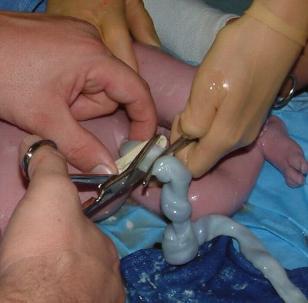
Leaving the cord alone. I planned and had a lotus birth. I recognise that this is an extreme most people will not be interested in, however, the principle of leaving the cord in tact at least until it stops pulsating, is one that is gaining popularity. Research now shows that babies whose cords are cut prematurely are deprived of up to half of their blood volume and are more likely to be anaemic, suffer brain damage or develop autism. In a straightforward birth there is no reason whatsoever to interfere with this process and doing so is potentially very harmful. Where my view is considered a little more radical is in the belief that even in a complicated birth, leaving the cord alone is possible and even advisable. If a baby is compromised at birth then it needs all of the blood and oxygen that it can get, cutting the cord deprives them of both. Many people seem to be under the impression that a nuchal cord, that is, when the umbilical cord is wrapped around the baby’s neck, is an emergency situation and that cutting the cord is necessary in cases when it is tightly wrapped. This simply isn’t true and this article explains why.

I’ll leave it there for now, but if there are any other aspects of my Birth Contract that you would like to know more about, please comment and I will do my best to explain my reasoning. Thanks for reading.

A Healing Birth Can Still Hurt

It’s a secret no one will tell you. My dear friend, and fellow blogger, Chloe, wrote about this recently. For those of us who have had traumatic births, we sometimes place a lot of hope on a subsequent birth, it becomes a lifeline out of the pit of that trauma. So what happens when that lifeline snaps? What happens when you don’t get the amazing birth you were planning? What happens when, like me, you get a birth that is far removed from the one you wanted but one that was not traumatic, in which you were completely respected and had your contingency plans followed to the letter?

My recent birth genuinely was healing and empowering. It was a positive experience, by and large. I was incredibly well supported, I was respected and listened to. I had all of my wishes listened to and accommodated where at all possible. I came out of it feeling elated that I had done something so rare and thrilled that people were talking about it. It might make a very real and positive difference for other women. My relationship with the Munchkin has improved massively. I can say with absolute sincerity, finally, that I gave birth to him. For years I could not say that, he was surgically removed from me, my caesarean wasn’t the same as giving birth. Now I feel differently and because the Bean’s birth followed such a similar pattern to the Munchkin’s, I can also speculate now that no amount of support would have resulted in a vaginal birth with him either. For years I was carrying this heavy weight around my neck: what if we had just done x, y or z? Well this time we did do x, y and z and it still didn’t result in a normal birth.

But there is a dark side to that realisation. For the first few weeks after the Bean’s birth I felt lighter. I felt relieved. But as time passed I realised the consequence… if nothing I could have done would have made any difference then why did my births both end in caesareans? If it was nothing to do with the support that I had, nothing to do with my antenatal preparation, nothing to do with the external conditions of my labour, then what is wrong with me? Because that is where my mind wanders, towards a reason. I’m not the sort of person who can just accept that “these things just happen”. Maybe once they do, but twice? Twice the same thing happened to me and my babies. To me that means something. To me that means that there is some sort of problem with me.

That’s a dark place to be. No matter how much those around me bent over backwards to make my birth as positive as it could be, no matter how close my bonds are with my children, I am still left aching emotionally. I am grieving for the birth I did not get. Again.

I know there will be people who think, and indeed, say, that I should shut up and be grateful that my babies are alive. I’ve heard it before, I’ve been told that I have “lost sight of what is really important” and to them I say: I matter. My mental health matters. My scarred uterus matters. My obstetric future matters. I don’t intend on having any more children, two has long been my theoretical limit, so right now I’m trying to come to terms with the idea that I will never, ever have a vaginal birth of any kind, never mind the beautiful home birth of my dreams.

There are three little words that I have read dozens of times in VBAC birth stories, three little words that carry such depth of feeling that I don’t think many people could fail to be moved by them and I expected to be uttering them myself: “I did it”. I will never say those words and that hurts.

So to all those wonderful, Very Brave And Courageous women out there who didn’t get their VBAC, or whose births have not taken them on the journey that they expected or wanted: I love you, I am crying with you and it is OK to cry, to grieve.

I Am Woman… Hear Me Roar

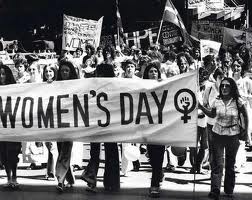
Today is International Women’s Day, so I’d like to take a moment to acknowledge the wonderful women in my life and write a bit about what the event means to me.

The theme this year is “Connecting girls, inspiring futures”. I think it is so important that young girls and women are encouraged to think about their sexual health, their futures and their relationships, to value themselves enough to make positive choices. The only way that happens is through the examples of positive role models. There are far too many pop tarts gracing the magazine covers and television these days. Hyper-sexualised “singers”; super-skinny celebs who are famous for being famous and make a reputation for themselves as lacking intelligence; lost and desperate starlets who poison their bodies and have their own rooms reserved in rehab for their frequent falls from the wagon. It’s a sorry state of affairs.

There are a small handful of alternatives out there, such as Tyra Banks, who not only represents a more healthy body type these days, but who works to help girls and young women value themselves. That’s not to say she isn’t also making a lot of money out of the good PR of her apparent altruism, but I think that’s true of most philanthropists if you look at the whole picture. Then there’s one of my favourite singers, Pink, whose attitude and music set a wonderful example to young girls, showing them that they can be themselves in the face of peer pressure.

It’s really important to me to recognise that even in the UK, there is still inequality between men and women. Women still earn less than men in the same jobs; women fill more service roles and less professional roles than men; the socially valuable role of mother is extremely undervalued financially and culturally (how many times have you heard a woman say “I’m just a mum” when asked her occupation?); women bear the brunt of the government’s spending cuts too. Women often seem to be the ones to take responsibility for their contraception too and many of the options are hormonal; that is, they work by changing our biological functioning. What are the physical and social implications of that?

Teenage girls were routinely paraded through the school nurse’s office in the last couple of years, to be given the HPV vaccine, with the promise that they would be protected from cervical cancer. There is some concern that this vaccine gives girls a green light to have unprotected sex, as they, and their male peers, may believe that being vaccinated against one STI makes it safe to have unprotected sex. Not the right message for these young people at all. A number of my friends with daughters of the appropriate age talked about the issues with their daughters and helped them come to fully informed decisions about whether to accept the vaccine or not.

As mothers we are censored and discriminated against for the way we feed our babies, both breastfeeding and formula feeding mothers report being discriminated against or judged, sometimes by businesses but all too often by other women. Whether women really are judging each other is not easy to determine, we often project our own insecurities onto onlookers and read judgement where there is none.

It’s acceptable for the female body to be depicted as a sexual object, but not as a mother growing or nourishing her child. Men’s nipples can be shown in public, but women’s nipples can’t. For a very thorough exploration of the topic of infant feeding as a feminist issue, please see this blog post by The Alpha Parent, particularly points 4 and 5. Caution: If you are offended by the facts of formula feeding it’s probably better for your blood pressure to simply not click the link.

Birth is also a feminist issue, both for the women giving birth and the women providing care. Midwives who refuse to conform to the medical model and instead provide woman-centred care, are bullied and harassed in the workplace, in some cases risking their livelihood and even imprisonment. Pregnant and birthing women are taught to expect to lose all of their dignity during birth, to have decisions about their own bodies made by someone else. This is, of course, absolutely unacceptable and untrue, it is perfectly possible to retain both one’s dignity and bodily autonomy in birth, no doctor or midwife can legally force a woman to comply with hospital protocols against her will, to do so is assault. But the language used by maternity care providers often hides this fact. Women are told that they are “not allowed to do x”, or that they “have to have y”. Care providers who use this language should be reported to their supervisors.

The global picture for women is even more bleak. The very fact that we need an International Women’s Day is itself a telling sign of the huge inequalities and difficulties that women face. I think it’s vital that we take the opportunity to reflect on the situation and see if there is anything we can do to change it. One day a year isn’t much, it’s a token gesture really, unless people really take notice and do something positive. One off events like this are intended to do that, to draw attention to an issue and have an impact reaching beyond that one day.

An individual can contribute in a number of ways, from simply letting those important women in their life know how special they are, to mounting a campaign against a sexist corporation or government! Check out the IWD website for ideas on how you can make a difference.

I’m already a birth and breastfeeding activist, albeit on maternity leave at the moment, so I will mark today with a huge thank you to some very special women:

My mum, Linzy; my dear friends, Jo R-D, Lisa S, Vicki M-W, Debs R, Lori F, Sarah C, Kellie R, Sally P, Chloe B, Gillian S; my friends and colleagues Beverley B, Nadine E, Debbie C-D, Jo W, Ruth K, Ruth W, Caroline W; fellow campaigners Emma K, “Mrs BWF” and everyone else who is working tirelessly to inform and empower other women. Thank you all for being amazing women.

The All Powerful Birth Contract

My lotus caesarean was possible because I gave the possibility serious thought and planned for it, just in case. I discussed each aspect in depth with my independent midwife and prior to my labour she even floated the vague idea past the Consultant Midwife at the hospital, as a hypothetical situation, for her to discuss with her colleagues. When we arrived at the hospital we produced the following document, which details all of the conditions on which I would accept obstetric help. It is firmly worded, leaving no room for anyone to override my consent. I am so glad I had it and I am reproducing it here in the hope that others will be able to use elements of it, or the document in its entirety, to enable them to get the care and the birth that they are entitled to. It is written with the fact that I had independent midwives and a doula and was planning a home birth, however, it can be edited for those with NHS care providers and those planning a hospital birth. Please feel free to take what you can from it and share it with anyone you may feel would benefit from it.

Birth Contract

Baby expected: Early 2012

Planned place of birth: Home

Independent Midwives (IMs): ****

Birth Partners: ****

Onset of labour

If delivery prior to spontaneous onset of labour is medically indicated, I will only consider induction of any kind or caesarean section after very careful discussion with my independent midwife (IM) and husband.

Labour/Admission to Ward pre-section

I wish for my husband, IM and doula to have access to me to continue providing support, though I understand if this is only possible by rotating persons present in the delivery room.

My birth supporters have been given direct permission to advocate for me if I am unable to do so for myself.

I do not consent to vaginal examinations.

I do not consent to CFM without careful consultation with my IM about the possible risks vs benefits.

The birth space will be respected; anyone wishing to enter the room must knock and await invitation to enter, quiet voices will be used, lights will be dimmed.

I do not consent to the use of prostaglandins.

I do not consent to augmentation of labour with ARM or syntocinon. If there is a genuine reason to accelerate the birth of my child I will agree to caesarean section after discussion and agreement with my IM and husband.

I do not consent to administration of pethidine or any other opiate pain relief.

I will only consider epidural anaesthesia after careful consultation with my IM.

Birth & immediate post-natal period

I do not wish to be coached to push.

I will be using whatever position is most comfortable for me.

I do not consent to episiotomy unless an emergency situation develops.

I do not consent to ventouse or forceps delivery without consultation with my IM.

My baby will be handed directly to me for immediate skin to skin.

I do not consent to prophylactic administration of syntometrine.

I do not consent to premature cord clamping.

If my baby is in need of medical attention, it will be provided with baby in my arms or on a firm surface right beside me. There is NO NEED TO CUT THE CORD FOR THIS. I am planning a lotus birth, the placenta will remain attached to my baby, even in the event of a caesarean section.

My baby will be treated gently and respectfully; no vigorous cleaning, no routine suctioning of the airways.

I do not consent to routine administration of vitamin k. If the birth has been traumatic then I will consider oral vitamin k only and only after discussion with my IM and husband.

My family and I will not be separated. Provision will be made for my husband to remain with me and our baby at all times.

Caesarean Section

I will only consent to a caesarean section upon careful discussion with my IM and husband.

My IM is to accompany myself and my husband to theatre.

I do not consent to routine prophylactic antibiotics during surgery.

Anaesthesia should be in the form of spinal block, rather than epidural. General anaesthetic should only be administered with the direct consent of myself or my husband, upon the advice of our IM.

Voices will be kept low, as will lighting for the birth.

Forceps are only to be used to extract my baby after thorough efforts by hand have been exhausted. My IM will be watching.

My husband and I wish to discover the sex of our baby ourselves, no one else is to announce it.

The baby will be handed directly to me, uncleaned and with the cord intact and un-clamped.

Administration of syntometrine will be delayed until the cord has stopped pulsating. If this takes an unusually long time we can negotiate.

My placenta is to be kept attached to the baby and removed from me only after the umbilical cord has stopped pulsating. I understand the risks of my abdomen remaining open for this period.

If my baby requires immediate medical attention, it will be provided with baby in my arms or on a firm surface right beside me/between my legs. There is NO NEED TO CUT THE CORD FOR THIS. I am planning a lotus birth, the placenta will remain attached to my baby unless there is a clear medical need to separate them, not including resuscitation, as this can be done on a firm surface beside me. I do not consent to my baby’s primary source of oxygen (through blood flow from the placenta) to be cut off.

If I am unable to hold my baby immediately following birth then my husband is to be the primary contact.

If my baby does need to be taken from myself and my husband then my IM will remain with him/her at all times.

My baby will be treated gently and respectfully; no vigorous cleaning, no routine suctioning of the airways.

In the event of caesarean section, I will only consent to oral vitamin k if for some reason the cord has been clamped prematurely.

If the surgery takes place at night, provision will be made for my husband to remain with me and our baby.

Provision will be made for my baby to remain close to me at all times, including use of a co-sleeper bed/crib.

In the Event of Transfer for Retained/Adherent Placenta

My baby is to accompany me into theatre, as are my IM and husband.

My husband is to remain with me and our baby at all times, if admission is at night then provision will be made for him to remain with us.

Provision will be made for my baby to remain close to me at all times, including use of a co-sleeper bed/crib.

Feeding

I am planning to breastfeed and do not consent to my baby being given formula under any circumstances. If I am under GA then my husband and IM have permission to put the baby to the breast for me and express my milk to be given by cup or syringe. My milk or donor milk is to be given if I am incapacitated or unable to feed my baby myself for any reason.

I do not consent to the use of bottles under any circumstances.

Admission to Special Care

If my baby needs admission to the special care unit, my husband and I will be given unlimited access to our baby and we will be using Kangaroo Mother Care.

Please see feeding instructions above. If tube feeding is required for any reason, the milk MUST be breastmilk.

Opening Eyes

I have to start by saying that the labour and birth of my second baby followed almost the exact same biological pattern as my first birth experience. This time, however, I have not come out of it traumatised. I am very sad not to have had the HBAC that I planned for and dreamed of for so long, but the birth I did have was instinctive, empowered and healing. I was respected, I had amazing support from everyone around me, my body and my decisions were truly my own and I have come through the experience without regret.

So my labour began with a few indefinable niggles during Friday 27th January. I was absolutely convinced that my baby wouldn’t be born until February, having gone to 42+2 first time around I expected a slightly longer than average pregnancy again. So I tried not to get too excited about the niggles, being only just 40 weeks. However, my brain felt like it was trying to shut down too, I couldn’t concentrate on anything and just wanted to clean my house! I sent my colleagues on Four Mums a message asking for them to find cover for me for the upcoming weekly topic and joked that my neocortex was trying to shut down for birth. It was a joke, but it turns out I was spot on. I contacted my doula, Vicki, as she lives some distance from us and I wanted to make sure she had a good heads up, so I told her I was niggling but that I would probably still be niggling in a week! I knew my independent midwife, Debs, had been at a birth that morning, so I sent her a text asking if her other client had birthed and I had the all clear to go. She replied in the affirmative and I let myself relax, knowing everything was in place.

Continue reading

Entering the Birth Head Space

pregnant-beach-sunset-mother-51386

Before Christmas I decided that I needed to start winding down towards my forthcoming birth. I started cutting back on my volunteer and support work and tried to focus on me and my family. Christmas made it easy, plenty of family distractions. Entering January brought some challenges, it has been hard to stay away from the forums and groups that I typically frequent and to keep “work” at bay. If my professional life were completely disconnected from birth and parenting then I would just keep going, keep life normal for as long as possible in order to prevent days or weeks of waiting for birth. But my “work”, such as it is, is to support other pregnant women and new mums through problems they are having with their maternity care providers. I’m a sensitive person, I am easily emotionally stirred by the experiences of others and I find it extremely difficult to turn a blind eye to the problems of others. While this is a massive bonus normally, allowing me to fight passionately on behalf of others, at this point in my pregnancy I really need to focus my emotional energy inward, on myself.

There are others like me, with passion, enthusiasm and time to provide advice and support to those who need it. Acknowledging this and trusting them to continue to do so in my absence has been challenging, it is something I absolutely must do now.

A couple of weeks ago, my tribe of wonderful women friends and my amazing mum, came together with me to celebrate my pregnancy and the new life about to be born, in the form of a blessingway. It was a truly wonderful occasion, with friends coming considerable distances to join me for this, so much thought and attention had been applied by all, especially the lovely Jo who organised it. It was a deeply spiritual ritual, tailored to me and my beliefs, but hopefully open enough for those present to share in the thought behind it even if they came from different spiritual or religious backgrounds. Together we shared our fears and hopes, channelled energy and most importantly…. ate cake!

Henna Belly

In the moments since in which I have struggled to keep worries at bay, I have looked down at my henna belly, touched the beads strung upon the necklace made for me and imagined the women of my tribe encircling me. Feeling their energy and support around me and within me is a true blessing.

As I approach this birth, which could happen any time in the next few weeks, I will continue to remember that and draw on it for the strength I need to overcome the challenges of the end of pregnancy and to enter the head space I will need for birthing my baby.

I feel emotionally ready to enter birth, I’m prepared on a practical level too with everything we need gathered together and ready to use. We have had a trial run with the birth pool, inflating and filling it, which, of course, had to be followed by an evening spent relaxing in it by candlelight. So now it is simply a case of allowing baby to be physically ready to choose the day. This is the hard part for me, being gracious and patient, though I know and believe it to be necessary and worthwhile. I’m still a normal human woman, I am uncomfortable with my size now and not sleeping as well as I wish I could, I’m bursting out of all of my maternity clothes and constantly fending off the “When are you due?” question with my suitably accurate “Some time soon” response.

I was given some affirmations at my blessingway and have written more for myself since. I share some of them with you now.

I am a link in an endless chain of birthing women.

300,000 women will be birthing with me. Relax, breathe and do nothing else. Labour is hard work, it hurts and you can do it.

We have a secret in our culture, and it is not that birth is painful, it is that women are strong. – Laura Stavoe Harm

I am surrounded by love and support.

My baby will be born at exactly the right time.

Live every day, enjoy each moment of pregnancy, for it won’t last long.

Every day my baby grows more ready to be born.

My body knows how to grow and birth the perfect baby.

Every day my body is preparing for birth.

Use this time wisely.

For more Blessingway inspiration, please visit my Pinterest Board.

Breastfed Babies are “More challenging”?

Unless you live under a rock, it would have been hard to miss the news today…. breastfed babies cry more than bottle fed babies… they have “more challenging temperaments”. Really? Where are these headlines coming from?

A recent piece of research from the Medical Research Council (MRC) Epidemiology Unit has found that breastfed babies are perceived to be more “irritable” or “challenging” than their formula fed peers, by their parents. The researchers have been quick to state that this is actually normal, that babies cry for reasons other than hunger, that formula fed babies are essentially overfed (dare I say, sedated?) and that parents should adjust their expectations of normal infant behaviour, doing so may result in more mums breastfeeding for longer.

The “by their parents” bit highlighted above is the single most important aspect of this research. This was not a robust scientific study, it was a survey of just 316 parents, so for starters it isn’t a large enough study to be statistically relevant. Secondly, parents are not impartial, we all love our babies very much, but our perspective is coloured by that. It is also coloured by our expectations and a whole myriad of feelings.

Most mums in the UK initiate breastfeeding, but by four months only 7% of UK infants are exclusively breastfed. One of the often sited reasons mums give for stopping breastfeeding, or introducing some formula feeds (mixed feeding), is that breast milk alone didn’t satisfy their babies. There are various reasons that parents might believe this, despite evidence to the contrary, one of which may be cultural expectations of infant behaviour. This is what the conclusions of this study are getting at. Formula feeding has become so common in our society, along with detached parenting techniques, that our perceptions of how babies should behave are completely warped. We think they should sleep through the night, feed every four hours, be content to be left alone, or with people other than their mothers for extended periods of time and basically be seen and not heard.

How many well-meaning friends and relatives suggest a bottle in order to settle a restless baby? How little faith in their own bodies do many mothers have?

Formula fed babies may go longer between feeds (because formula is harder to digest and therefore artificially fills babies up for longer), add dummies and controlled crying into the mix and you have very young babies who are essentially trained not to bother crying for their mothers. Obviously there are many parents who formula feed on demand, rather than to a schedule, and who are very attached to their babies, I’m simply intending to highlight other variables that may be contributing factors to the behaviour reported by the parents in this survey.

Also, if as a culture we expect formula fed babies to be more satisfied than breastfed ones, and if we have huge numbers of mothers who ceased exclusive breastfeeding for the very reason that they wanted their babies to be more satisfied, then when we ask them a series of questions how likely is it that they will give the answers they expect to be giving? How many mums who have niggling regrets about introducing formula might defend their decision by stating that their baby is perfectly content, thank you very much?

I don’t mean to say that the respondents to this survey consciously lied, but their answers are very likely to be the product of their experiences and expectations.

The survey was also conducted among parents of three month old babies. I wonder how many of the breastfeeding mums were in the midst of growth spurts and teething, approaching the four month sleep regression and generally feeling the effects of life with a tiny baby who is so reliant on their mother alone to fulfil their dietary needs, with very little support from their family or peers. Their feelings almost certainly coloured their responses too.

The discussions rampaging around the internet today demonstrate clearly the number of breastfeeding mothers who feel that their babies were perfectly content and hardly ever cried because they were able to meet their needs quickly, both nutritional and comfort needs, with the breast. These mums, in the circles I tend to move in, are well supported, determined, knowledgeable and tend to follow attached parenting ideals. They are not “typical” mums in our society, but they demonstrate, again, another set of variables that might suggest that breastfeeding could be a heck of a lot easier than the respondents of this survey have found it.

As with all scientific research, we also have to consider who has conducted it and any other interests they may have. I haven’t been able to substantiate this, but one comment on a Facebook thread that I saw this morning, suggested that this piece of research was funded by a board of over 20 interested parties, some of whom, you can bet, have financial interests in the formula and baby food industry. If this is true then we do need to take a very deep breath before taking the conclusions of the study seriously, despite the insistence of the researchers that this evidence is good news for breastfeeding.

I think we need to take this research with a rather large pinch of salt.

New Year Reflections

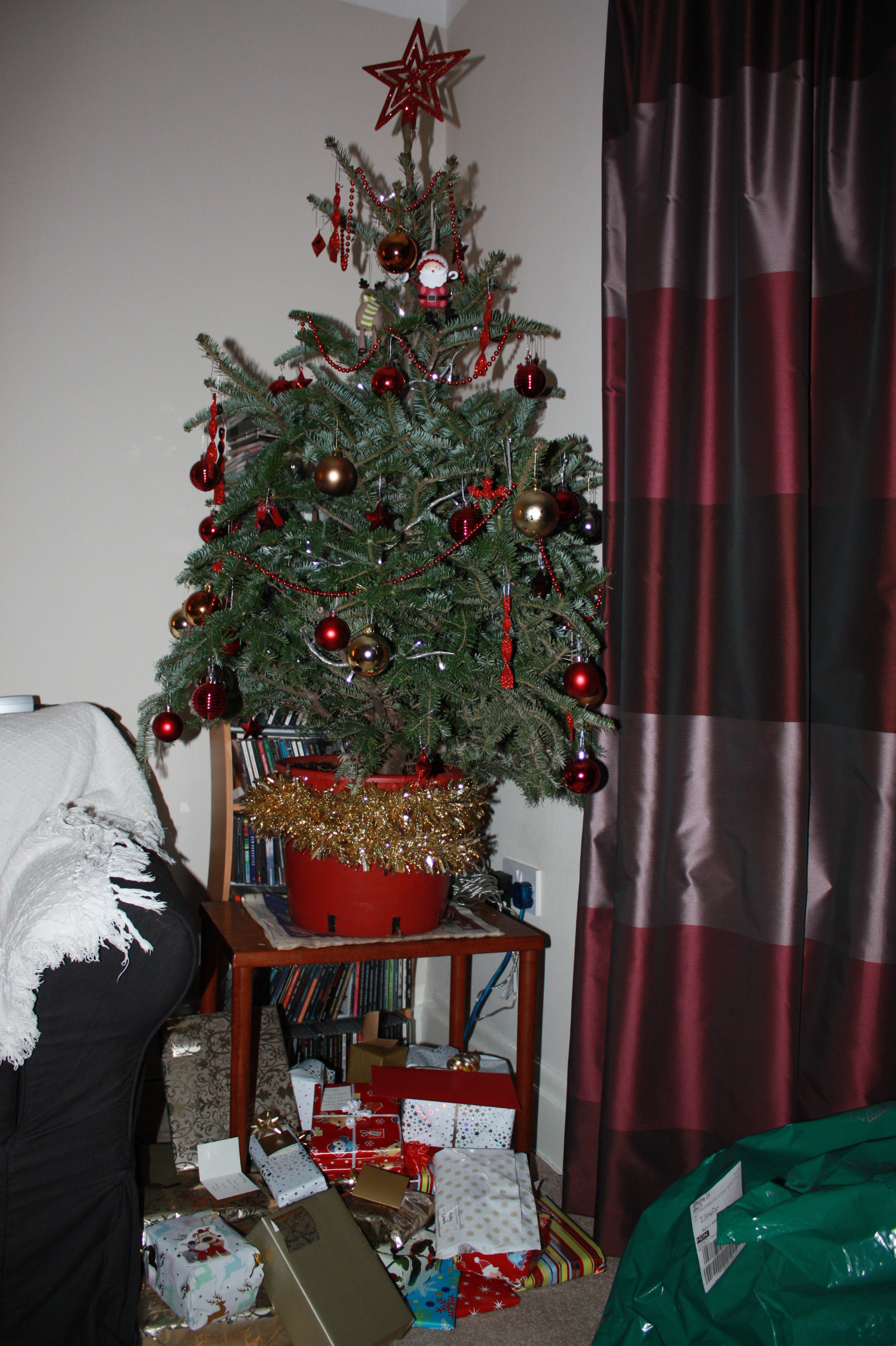
This was the first Christmas that the Munchkin has really understood anything about the holiday or been able to get excited about it. It was also his first healthy one! His first two were plagued by sickness bugs and fluey-colds for all three of us. Finally we have some nice photos of all of us looking healthy and well on Christmas morning. Yay!

In the build up to it he got excited about the decorations, especially the tree and he loved helping open cards as and when they arrived, the first few he memorised which was from who but eventually there were too many for him to keep track of. We noticed that he kept saying, with longing “Wish I had [insert name of train here]” a lot and hubby and I would cast furtive glances at each other, knowing we hadn’t bought him what he was pining after.

The solstice passed quietly, although that’s the meaningful day for hubby and I we prefer to celebrate the season with our families a few days later. So Christmas morning arrived and started well. The Munchkin was up relatively late for him, so we didn’t have the ridiculously early start we had prepared ourselves for. We’d put out the presents under the tree on Christmas Eve and didn’t really trust the Munchkin to play happily on his own in the living room like he usually does with all of those parcels tempting him, so knew we would have to get up at the same time as him.

Hubby distracted the Munchkin while I nipped to the living room and turned the tree lights on and when they came in we were treated to the biggest “wow!” you’ve ever heard. It was lovely. But we didn’t dive right in, we got breakfast and got dressed, took our time, determined not to start out on the road of presents being the all-consuming primary feature of the morning. The Munchkin was fine with this and went along with it amicably. Phew.

When we started opening presents it was all very sweet and peaceful, each gift was opened slowly and thoughtfully and the moment of revealing it was treasured. A few books came first and the Munchkin had a flick through each one, enjoying them and asking what they were about, appreciating who they had come from. It all seemed to be going perfectly.

But the pace began to pick up a bit and when the first of the train-based presents came out we noticed a change. The Munchkin no longer cared who the gift was from, he wanted to play with it right away, but only for a few seconds before clawing desperately at the next gift. Once all the presents were opened we took some time to play with the new toys and at lunch time my parents and grandfather arrived, to much excitement from the Munchkin. They brought with them more presents and so a second opening-session began, this one nothing like the relatively positive first one.

The Munchkin had no patience for opening the gifts, he wanted the paper off NOW and carelessly discarded it, each new train, for he received several, was met with a squeal of delight but very quickly it was cast aside in a feverish and desperate need for the next one. When all of the presents were opened he almost seemed disappointed and we were soon met with requests for more and choruses of “Me want a talking Gordon/Edward/Percy” etc.

My delightful, thankful, gracious little boy had been replaced with a greedy and impatient monster and I had to take myself off to my room for a little cry over it. What did we do wrong? How did this happen?

As the days have gone on his pleasure in his new toys has been very positive and the pining for the things he did not get has been steadily diminishing, but it isn’t entirely gone. There was, in fact, one talking train that we ordered that hasn’t yet arrived and hubby and I have decided not to give it to him right away when it does eventually turn up. We don’t want him to think that we got it for him because he was demanding it. We don’t want to encourage the idea that he will get whatever he asks for, whenever he asks for it. So we will save it and give it to him when the new baby is born instead.

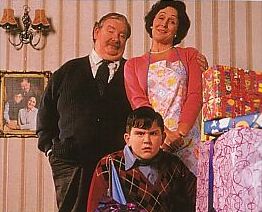
Hubby and I have done a great deal of talking over the last week, to see how we can nip this behaviour in the bud and try to prevent it developing into a Dudley Dursley situation (“36?! But last year I had 37 presents!”). This is what we’ve come up with:

  • Just one present from each family member. No more huge stacks, not even of small, thoughtful gifts. I’m confident that with some thoughtful explanation we can get our parents on board with this and more distant family and friends already only give one gift, which is as it should be.
  • Time tokens for all, for example, promises to cook for one another, or go for a walk together and so on. These can be unlimited. Day trips will become more of a feature too, tokens for days out at theme parks, museums and so on.
  • No more wrapping paper! Yes really. We’re thinking of each family member having a bag with their name on it and all the presents go in there, unwrapped. There is still the mystery and some excitement at discovering what’s in the bag, but the emphasis comes away from those physical gifts when they are not wrapped up individually. It also results in massive financial and environmental savings!
  • More regular giving of new stuff throughout the year. This might sound odd, but we think that by spacing out new acquisitions it will diminish the excitement and emphasis of those things on celebrations. It won’t be such a novelty to get a new toy or a new book. We don’t hesitate to buy the Munchkin new clothes as and when he needs them throughout the year, so why not do likewise with meeting his developmental needs with toys and books too? It also spaces out the spending so that December is less of a financial black hole, though see previous steps for the knock-on effect of reducing the cost of Christmas too!
  • We were already decided on not making a big deal out of Father Christmas and certainly steering clear of the bribery element (“Santa only brings gifts to good boys and girls”) and feel even more strongly about it now, confident that we are right in our stance on that one.

As a side note, we’ve also seen the wisdom in the decision of some of our friends to not send Christmas cards and will be following their example as of next year. The whole point of the Christmas card is, in my mind, to touch base with people, send them warm wishes and so on. But how many cards do we actually write a personal message in? Isn’t it better to reach out and actually speak to those we care about most in order to wish them well and catch up? Pick up the phone if you feel you’ve not kept up with someone as well as you would like. Duck out of the awful politics of who to send a card to and who not to, avoid the environmental and financial waste of cards that few people really value. I always buy charity cards made from recycled paper and recycle them again when I take them down, but the recycling process still uses energy and not all people do likewise.

Now that the festive season is coming to an end and the new year has begun, it’s all about our forthcoming new arrival. We have already begun de-cluttering the house; sorting out piles of paperwork and bills for filing, we’ve gone through our CDs, DVDs and even books (for those reading who know hubby in particular, this may come as a huge shock!) and started listing things on eBay. There’s a big stack of old clothes ready for charity donation. Hubby has tidied our cluttered landing and guest bedroom and we’ve retrieved our birth pool from the loft and checked that it is fit for re-use. The baby clothes have come out of storage, been washed and put in the baby’s wardrobe.

New year, new start, new life. Bring on 2012.

Yuletide Greetings

It’s almost upon us, Yule, or the Winter Solstice. It falls upon the 22nd December this year and is my favourite time of year. For those in the southern hemisphere it is of course, the summer solstice, so I’m speaking about the seasonal festival here in the northern hemisphere.

The winter solstice is the shortest day of the year, there is a good, basic explanation of the science here. Yule is an ancient Scandinavian festival that centres on fertility for the coming spring. The ancient Romans celebrated the solstice and called their 7 day festival Saturnalia, after the god Saturn. Solstice customs across Europe were absorbed into Christianity as it spread across the continent and many of the practices can be recognised in modern Christmas celebrations.

Yule has been adapted by modern pagans, of various paths, and features as one of eight annual sabbats. To me, it is a family festival, a time to slow down and be together, to shelter from the winter and celebrate the shortest day and the return of the sun as the days will only get longer from here on (until June, anyway!). We tend to celebrate on Christmas day with our families, as that’s the whole point of the festival for us, but I always look forward to the solstice itself as a turning point in the year and try to find a few moments to appreciate the wonder of the turning of the earth, the change in seasons and the promise of longer days.

As the Munchkin gets older we will incorporate this, and the other seasonal festivals, into our home education activities, chiefly through craft projects. There are hundreds of ideas online for decorations to make with young children at this time of year and recipes to cook and bake together. This year he is still a bit young and really not interested in crafts yet, he hates getting paint or glue on his hands! I took him to a lovely little café last week where you can buy plain pieces of pottery and sit and paint them while you enjoy a drink and bit of cake. They glaze it and fire it in the kiln for you to collect later. The Munchkin was a bit resistant and I did most of the work, but by the end he was at least happy to sit on my lap and pick what colours I should use and what words I should write. I can’t say exactly what we made at this point, but I will take photos after we exchange presents 😉

However you celebrate this time of year, many very happy returns.

“When are you due?”

It’s pretty much the first question from everyone who finds out that you’re pregnant. I think on a rational level, the vast majority of people know that you can’t really predict when babies will be born, but I suspect the majority still believe that the Estimated Due Date (EDD) is scientific and accurate at least some of the time. The truth is though, it’s an arbitrary date determined by outdated pseudo science, a best guess, based on the probable misunderstandings of ancient theories.

The theory goes that pregnancy lasts for 40 weeks (9 months + 1 week) from the first day of a woman’s last menstrual period (LMP). Where did this idea come from? It’s called Naagele’s Rule, named after German obstetrician Franz Karl Naegele (1778–1851), who devised the formula. I don’t believe that Naegele plucked this idea out of thin air, it is likely that he read Aristotle’s theory that pregnancy lasts for about 10 lunar months, and Naegele assumed that a lunar month was 28 days.

Aristotle, however, was what I call a “well rounded wise man”. He was a philosopher, mathematician, scientist and sociologist. With his education in physics, it is extremely likely that he knew that a lunar month is not in fact 28 days, but nearly 29.5 days, making 10 lunar months 295 days, NOT 280, over 42 weeks, NOT 40. What a difference to pregnancy length that makes. What Aristotle actually wrote was:

pregnancy may be of 7 months’ duration or of 8 months or of 9 and still
more commonly of 10 (lunar) months, whilst some women go even into the
eleventh month. 

http://www.ncbi.nlm.nih.gov/pmc/articles/PMC1341914/pdf/bmjcred00258-0017.pdf

Naegele’s Rule also assumes that all women have exactly 28 day cycles and that they ovulate on cycle day 14. Obviously, this is not true. There is great variation in both cycle length and ovulation timing. There is a suggested alternative formula, Parikh’s Formula, which is a date calculated by adding 9 months to a woman’s LMP, then adding the length of her average cycle, then subtracting 21 days. For example, a woman with 35 day cycles whose last period began on 1st January would do the following calculation:

1st January + 9 months = 1st October

1st October + 35 days = 4th November

4th November – 21 days = 14th October

This EDD is approximately one week later than EDD calculated by Naegele’s Rule.

A small study in 1990 by Mittendorf et al. found that the parity of the woman was a factor in the length of her pregnancy. First time mums had an average pregnancy of 41 weeks and 1 day (41+1), second and subsequent babies arrived at an average of 40+3. Some studies have also found racial variations in pregnancy length.

Normal human gestation is usually defined as 37-42 weeks, by the WHO, maternity professionals and academics, and yet the myth of the EDD persists. Midwives and obstetricians do nothing to correct this misconception, they often seem to fixate on the EDD, first calculated by LMP and then by ultrasound, the infamous “dating scan” that most pregnant women have at about 12 weeks in the UK. (My views on the reliability of ultrasound are explored in my previous post “Guess the Weight”). The dating scan has a 6 day margin for error, officially, and yet it is relied upon so strongly that a woman’s knowledge about her own body is usually dismissed in favour of what the machine says. For instance, were we using NHS maternity services for this pregnancy, the sonographer that did our early pregnancy scan (for reassurance) would have us believe that this baby was conceived 8 days prior to ovulation and 3 weeks after the last time we made an attempt to conceive, a passing familiarity with human conception will tell you that this is impossible. No, in fact, this baby was conceived when I actually ovulated and not by some freaky and convoluted miracle process of my dear husband’s swimmers breaking all records and my body releasing an egg more than a week before all the physical signs indicated the possibility.

Even so, knowing when you conceived doesn’t actually give you any particular insight into how long your pregnancy will turn out to be. Gestation is a natural process and as such, it can’t be timetabled. There is great variation and most of it is completely incomprehensible, there is no known explanation for the wide variety in gestation lengths, it’s just an organic part of life and one that I think we would all do well to accept.
People pin all of this importance on the EDD and their care providers make it worse by rushing to intervene as soon as pregnancy continues beyond 40 weeks, which it does in more than 50% of all pregnancies! In my own small way, I try to challenge this by reminding people of the “Estimated” in EDD and emphasising that normal pregnancy is 37-42 weeks. I have also refused to tell anyone the precise date that I will be 40 weeks pregnant. I know when that date is, as I know when we conceived, but it is not my EDD, to me there simply is no such thing as an EDD. Our midwife knows the 40 week date, but together we have no expectation that there is anything special about that one day. It’s a vaguely useful day to note down so that we have an idea of what 5-6 week period the baby might put in an appearance, that’s all. To all of our friends, family, neighbours and random acquaintances, we expect this baby to arrive some time in February, probably.